
Checklist for Choosing Clean Label Certified Supplements
When picking supplements, it's crucial to ensure they're safe, pure, and accurately labeled. Many supplements lack FDA approval before hitting the market, so third-party certifications fill this gap by testing for contaminants like heavy metals, pesticides, and harmful additives. Certifications such as NSF Certified for Sport, USP Verified, and Clean Label Project Certified guarantee quality and transparency. Here's how to choose the right supplements:
- Look for trusted certification seals and verify them online (e.g., NSF, USP, Clean Label Project).
- Check ingredient lists for unnecessary additives, artificial colors, or banned substances.
- Avoid proprietary blends that hide ingredient amounts.
- Request a Certificate of Analysis (COA) to confirm third-party testing.
- Ensure the product is made in a GMP-certified facility.
Brands like NutriFitt exemplify clean label principles by listing exact ingredient amounts, using bioavailable forms, and prioritizing transparency. Use this checklist to confidently select supplements that prioritize your health and safety.
What Clean Label Certifications Mean
Clean Label Supplement Certification Comparison Guide
Clean Label Certification Defined
Clean label certifications are third-party verifications that ensure supplements are safe, pure, and accurately labeled. Since the FDA doesn’t approve supplements before they hit the market, these certifications help bridge that regulatory gap.
These certifications confirm that the ingredients listed on the label match the product's actual contents. They also check for harmful contaminants like heavy metals, pesticides, glyphosate, phthalates, and plasticizers. Additionally, they screen for substances that could pose health risks or cause athletes to fail drug tests.
As the Akron Nutrition Center explains:
"Unlike prescription medications, dietary supplements aren't FDA-regulated. Third-party certification programs like NSF International and USP Verified test for safety, purity, and label accuracy, helping you avoid risky products."
The NSF/ANSI 173-2021 standard is the only global benchmark for third-party supplement testing. Certifications such as USP Verified even ensure that supplements meet FDA sanitary standards, which are typically required for prescription drugs. Below are some of the seals that represent these rigorous standards.
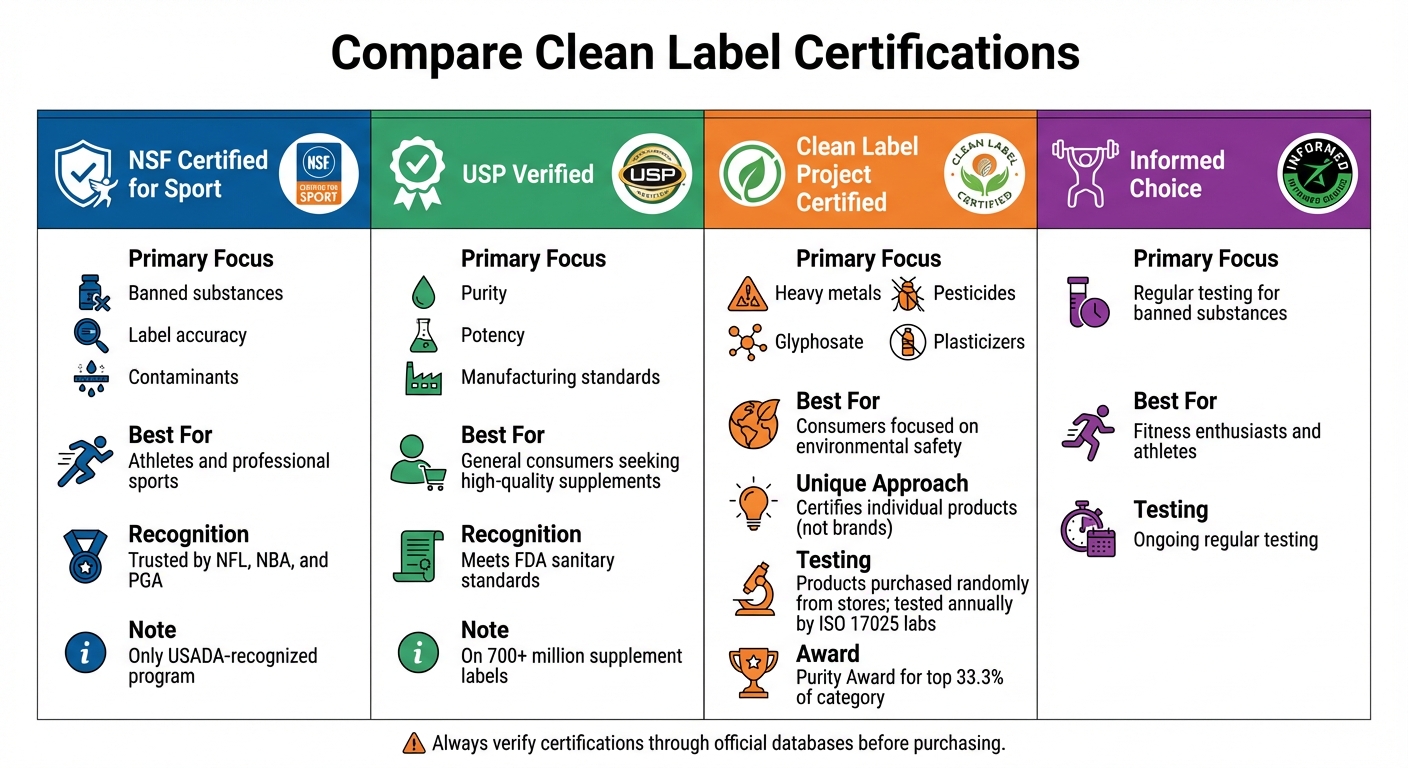
Certification Seals to Recognize
Certain certification seals stand out for their strict testing and focus areas:
| Certification Seal | Primary Focus | Best For |
|---|---|---|
| NSF Certified for Sport | Banned substances, label accuracy, and contaminants | Athletes and professional sports |
| USP Verified | Purity, potency, and manufacturing standards | General consumers seeking high-quality supplements |
| Clean Label Project Certified | Heavy metals, pesticides, glyphosate, and plasticizers | Consumers focused on environmental safety |
| Informed Choice | Regular testing for banned substances | Fitness enthusiasts and athletes |
The Clean Label Project takes a unique approach by certifying individual products rather than entire brands, ensuring that specific items meet their standards. Products are randomly purchased from stores or online, mimicking a real consumer experience, and are tested annually by ISO 17025 Accredited Labs. Only products ranking in the top 33.3% of their category receive the Purity Award.
Be cautious with certification seals. Some manufacturers use fake or unverifiable marks. Always double-check certifications through official sources like NSF or USP before buying. For athletes, the United States Anti-Doping Agency (USADA) recognizes only one program: NSF's 'Certified for Sport,' which is trusted by major leagues like the NFL, NBA, and PGA.
sbb-itb-7567710
How to Evaluate Supplement Labels
Check for Certification Seals
Start by looking for certification seals on the supplement label, but don’t stop there. Go the extra mile and verify their legitimacy through official databases. For example:
- USP Verified: Confirm the product is listed on usp.org.
- NSF Certified for Sport: Cross-check at nsfsport.com.
- Informed-Sport or IFOS: Use informed-sport.com or certifications.nutrasource.ca to verify.
Taking the time to confirm these seals can help you avoid mislabeled or low-quality products.
Dr. Alexandru Amarfei, M.D., Senior Consultant in Geriatric Medicine, highlights why this matters:
"In my clinical practice, I've seen patients spend hundreds of dollars on supplements that contained a fraction of the labeled dose - or worse, undisclosed contaminants. The supplement industry has a transparency problem."
Check Ingredient Lists
Once you’ve verified the certification seals, dive into the ingredient list. Pay close attention to the "Other Ingredients" section, which can reveal fillers, binders, and other additives manufacturers might prefer you overlook. Watch out for:
- Artificial colors: Such as Red 40 or Blue 1.
- Banned additives: Titanium dioxide, for example, is banned in the EU but still allowed in the U.S.
- Hydrogenated oils: These are best avoided entirely.
Be wary of proprietary blends. These list a total weight but don’t break down the amounts of individual components. This can hide the fact that only trace amounts of expensive ingredients are included, offering little to no therapeutic benefit. If the average dose per ingredient in a proprietary blend is under 100 mg, it’s likely ineffective.
For better results, look for supplements with optimized nutrient forms. For instance:
- Magnesium Glycinate is more absorbable than Magnesium Oxide.
- L-Methylfolate is preferable to Folic Acid.
- Methylcobalamin is a better choice than Cyanocobalamin.
Confirm Third-Party Testing
After reviewing the ingredients, check if the product has undergone third-party testing. A trustworthy brand will provide a Certificate of Analysis (COA) upon request. This document should include batch-specific lab results for potency, heavy metals, and microbial purity. Always ensure the COA’s batch number matches the product you have in hand.
Additionally, confirm that the supplement was manufactured in a GMP-certified facility. This matters because independent testing has revealed concerning results: 89% of sports supplements and 27.6% of multivitamins have failed quality tests. A 2023 study even found that melatonin gummies contained anywhere from 347% to -83% of the labeled dose, with 20% containing unlabeled CBD.
For fish oil supplements, trust your nose. A strong fishy smell often signals oxidation, while high-quality, fresh fish oil should have little to no odor.
Quality Assurance and Retailer Standards
Re-testing and Quality Monitoring
Clean label certifications aren’t a one-and-done process - they involve ongoing checks to ensure products consistently meet high standards. Certification bodies don’t just test a supplement once and move on. Instead, they perform regular audits and retests to ensure that quality remains intact over time.
For instance, NSF conducts annual audits and periodic retests of manufacturing facilities, while the Clean Label Project goes a step further by performing unannounced sampling of finished products. This ensures that manufacturers are always in compliance with the required standards.
Similarly, USP takes a proactive approach by conducting off-the-shelf testing. They purchase supplements directly from retail stores to verify that products meet science-based quality standards. This step is particularly important for identifying any issues that might arise during storage or distribution. Across the board, these certification bodies screen for contaminants to maintain product purity and safety.
These rigorous retesting measures not only protect the integrity of the manufacturing process but also align with the strict standards that major retailers enforce.
Retailer Certification Requirements
Big-name retailers are increasingly relying on third-party certifications to decide which supplements make it onto their shelves. For example, CVS requires supplements to meet the standards of organizations like NSF or USP before they’ll stock them. This creates an additional layer of assurance for consumers, ensuring that the products they buy are both safe and accurately labeled.
One standout example is the USP Verified Mark, which has appeared on over 700 million dietary supplement labels and packages since the program began. This widespread adoption underscores how essential these certifications have become in the retail world, serving as a clear signal of quality and reliability for both retailers and consumers alike.
NutriFitt's Clean Label Approach

NutriFitt stays true to its commitment to quality and safety by embracing clean label principles in every product it develops.
At the heart of NutriFitt's philosophy is transparency and science. Each product label clearly lists all active ingredients and their exact amounts - no proprietary blends, no hidden surprises. They also use standardized extracts to ensure consistent potency. For example, the Lion's Mane in CODEX is standardized to 50% polysaccharides, while Sabroxy® Indian Trumpet Tree Extract guarantees a minimum of 10% Oroxylin A.
"Every product we develop is formulated using science to ensure the highest quality and effectiveness available." – NutriFitt
To maximize effectiveness, NutriFitt prioritizes bioavailable ingredient forms. For instance, Vitamin B12 is included as Methylcobalamin, and Vitamin B6 is provided as Pyridoxal-5-Phosphate (P5P). Clinically studied components like NeuraChol™, NeuroRush™, and DigeSEB® further reinforce the consistent quality and traceable sourcing of their formulas.
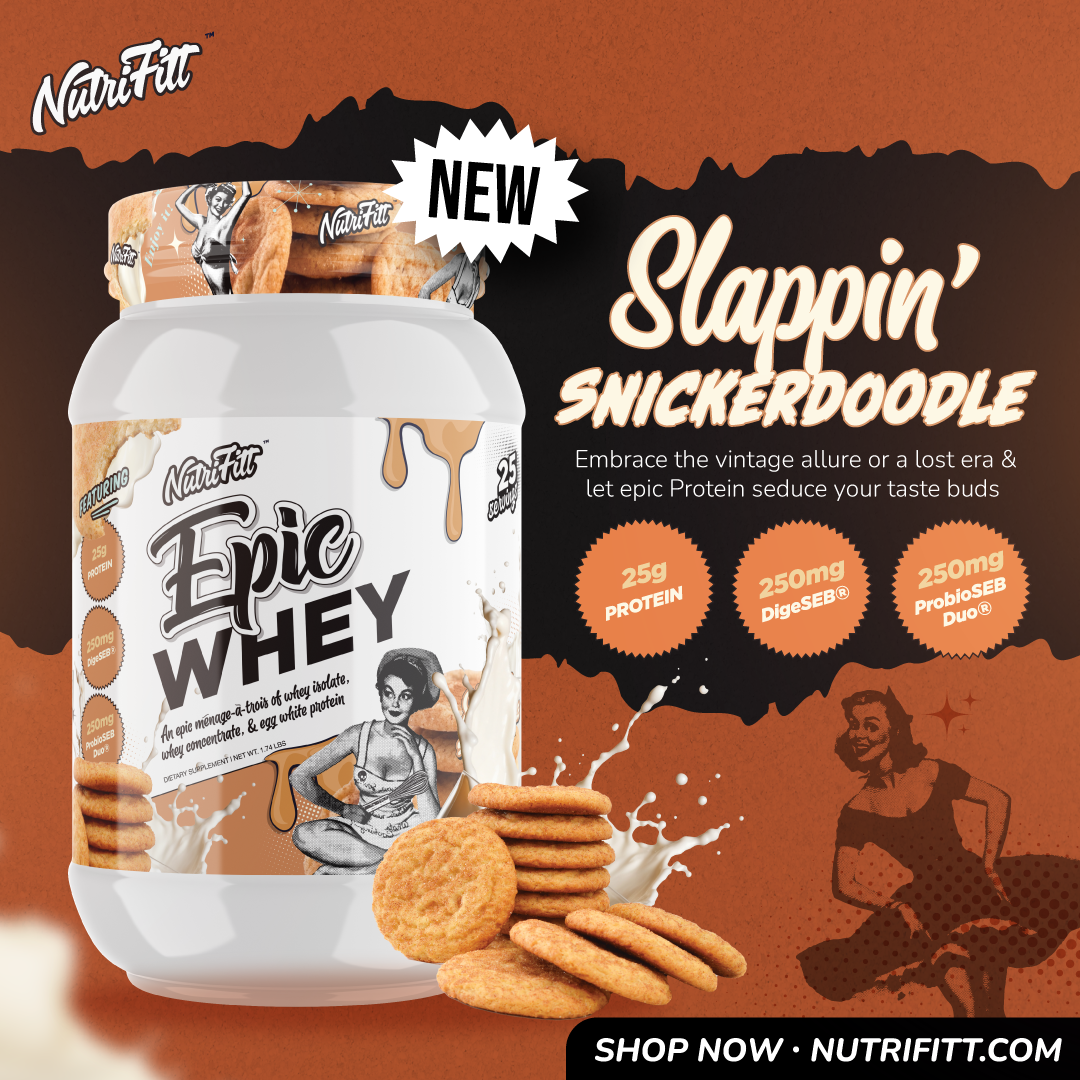
NutriFitt also addresses digestive health to promote better nutrient absorption. Their EPIC WHEY protein powder includes enzyme blends like DigeSEB® and HemiSEB®, which not only enhance absorption but also reduce the bloating often linked with protein powders.
This approach reflects NutriFitt's dedication to clean label standards, ensuring every product meets rigorous benchmarks for transparency and quality.
NutriFitt Clean Label Products
NutriFitt applies these principles across its product range, tailoring formulations to support diverse fitness and wellness goals.
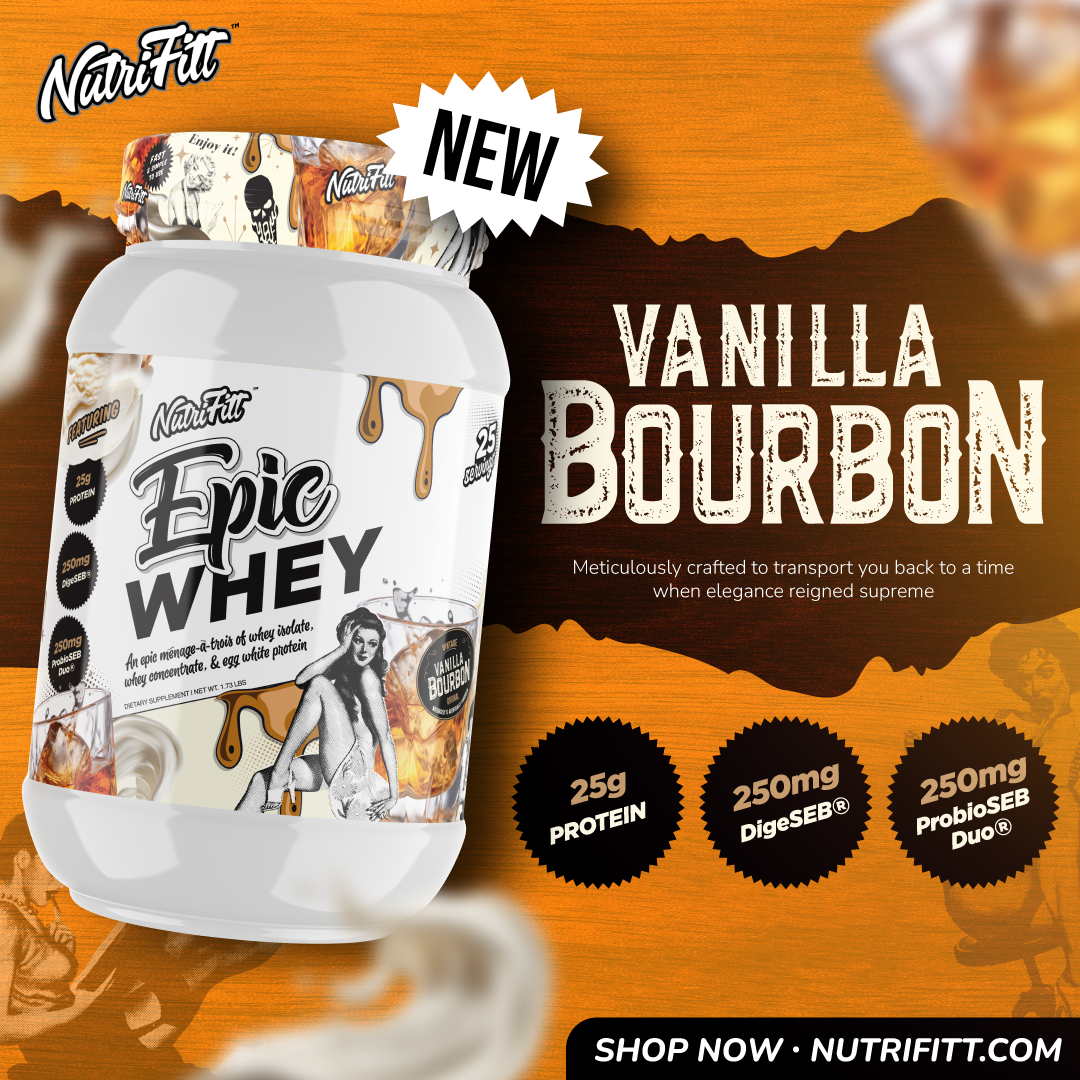
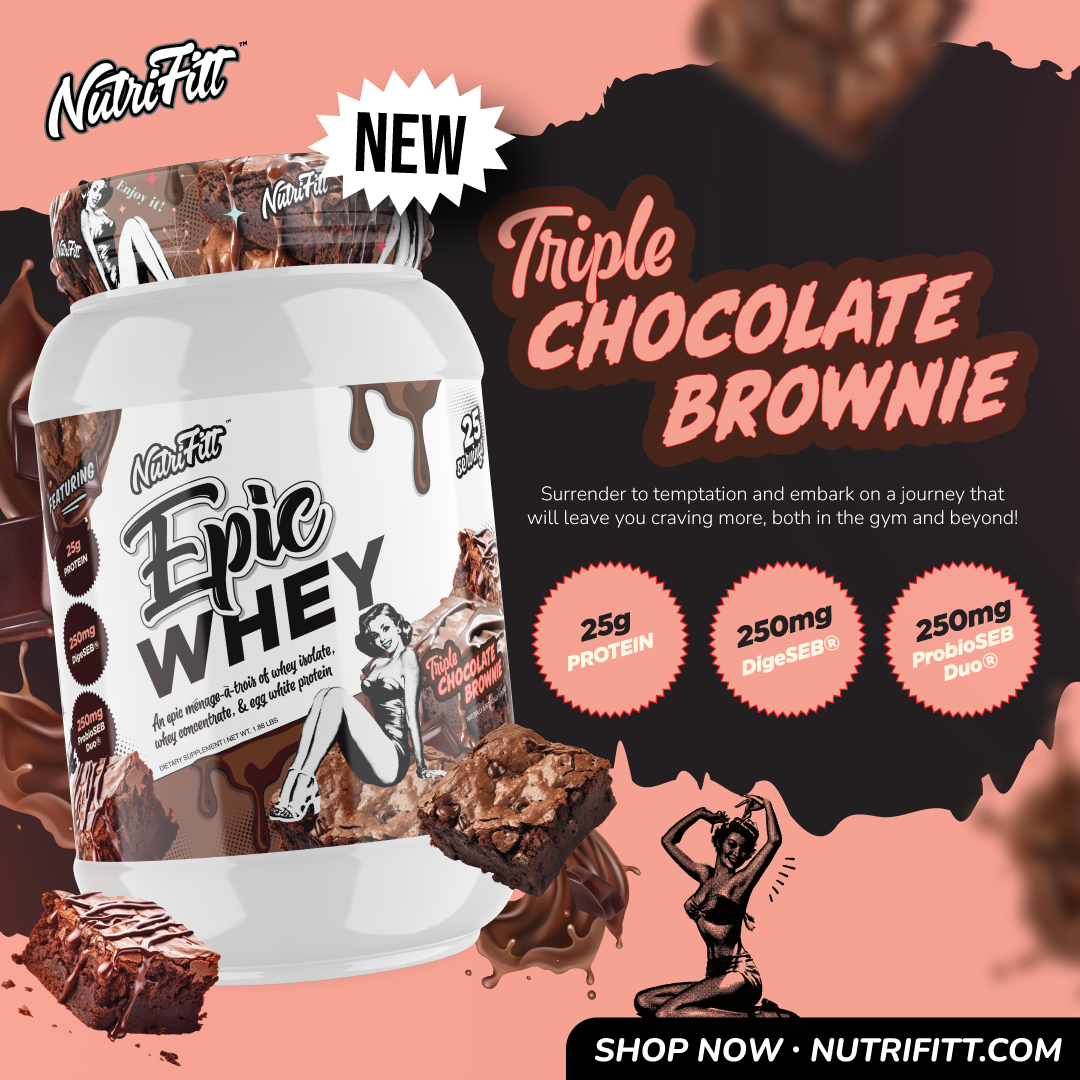
EPIC WHEY ($49.99, regularly $54.99) provides 25g of premium protein per serving with just 1g of carbohydrates. It combines whey isolate, whey concentrate, and egg white protein, all clearly listed on the label. The formula also includes patented enzyme blends like DigeSEB® and ProbioSEB Duo® for better digestion and gut health. With a 5.0/5 star rating from 12 reviews, 92% of users have given it a perfect score.
CODEX Advanced Nootropic ($44.99, regularly $47.99) is packed with cognitive enhancers like Lion's Mane (standardized to 50% polysaccharides) and Sabroxy® (standardized to 10% Oroxylin A). It also includes branded blends such as NeuraChol™ and NeuroRush™ for enhanced focus and mental clarity. The formula uses bioavailable vitamins and contains a 100mg caffeine blend for sustained energy. It boasts a 5.0/5 star rating based on 3 reviews.
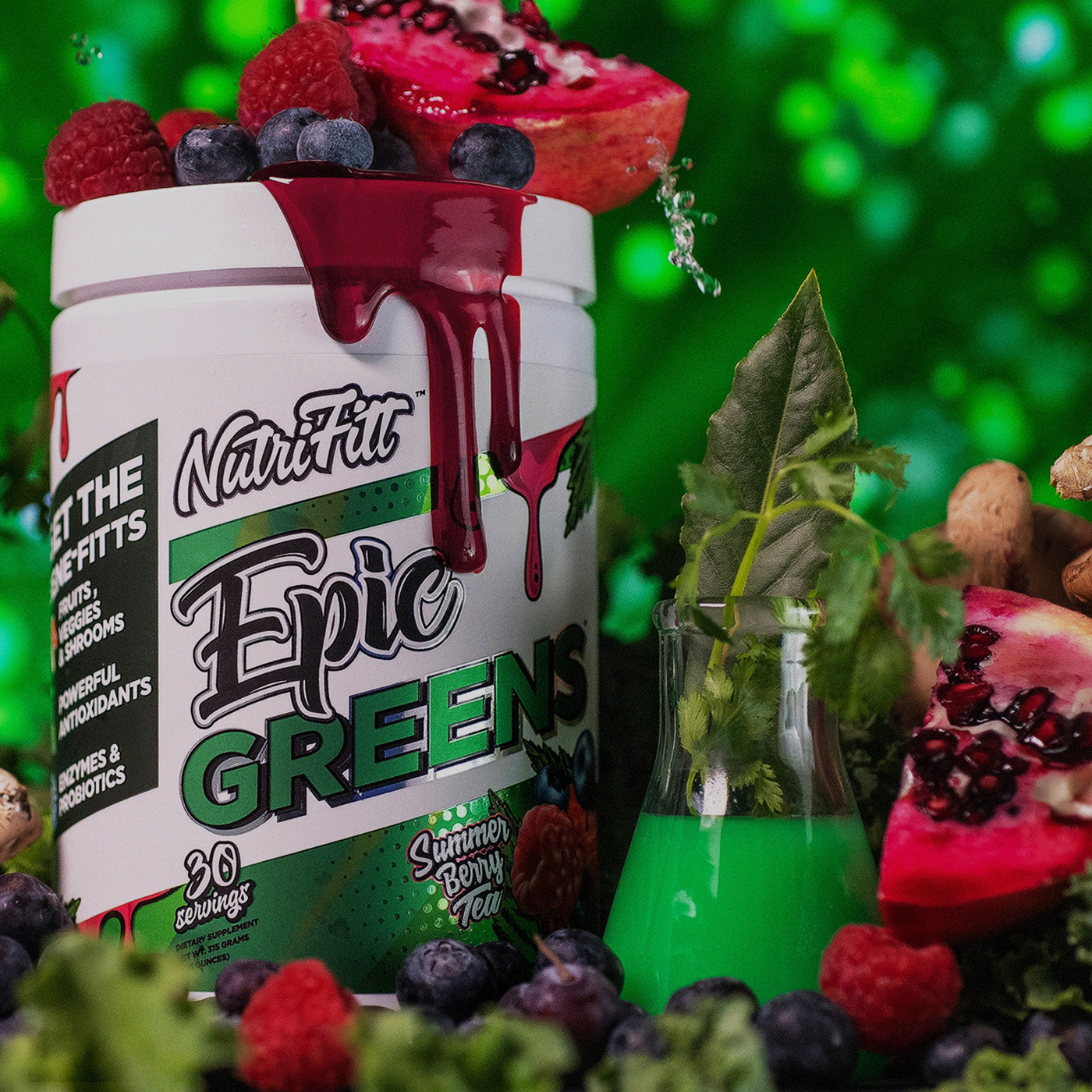
EPIC GREENS ($41.99, regularly $44.99) features organic-certified ingredients like the PeakO2™ mushroom blend and patented formulas such as Green Balance® and Betta Berries™. Astragin® is added to improve nutrient absorption, ensuring users get the full benefits of its clean-label composition. The product has a 5.0/5 star rating from 23 reviews, with frequent praise for its taste.
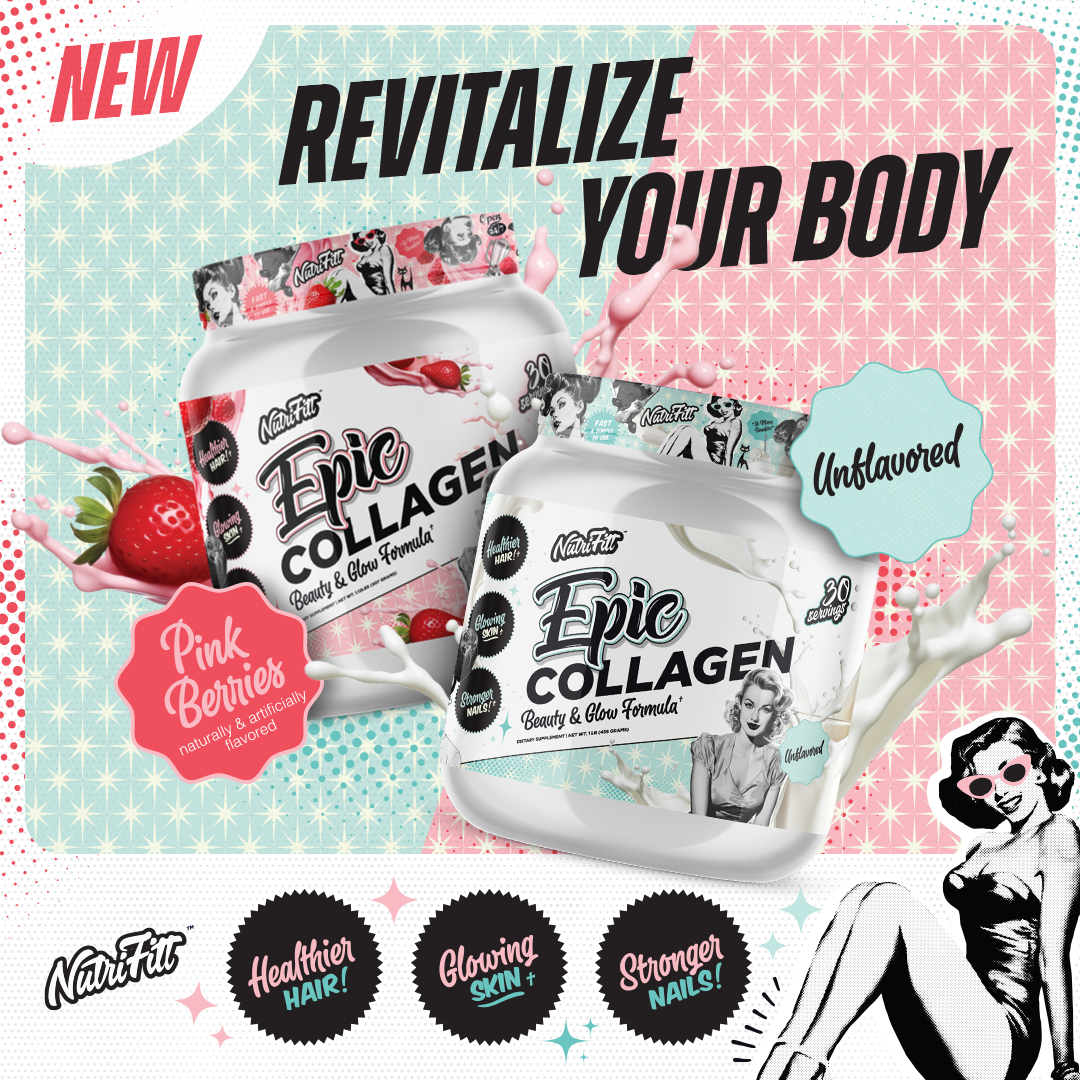
Epic Collagen ($44.99, regularly $47.99) incorporates sustainably sourced Verisol® Bioactive Peptides, Hyaluronic Acid (known for holding up to 1,000 times its weight in water), and AnaGain™ Nu to support hair and nail growth. With a 5.0/5 star rating from 3 reviews, users often report noticeable improvements in skin, hair, and nails.
| Product | Key Clean Label Ingredients | Primary Benefits | Price |
|---|---|---|---|
| EPIC WHEY | Whey Isolate, Egg White Protein, DigeSEB®, ProbioSEB Duo® | Muscle recovery, 25g protein, optimal digestion, gut health support | $49.99 |
| CODEX | Lion's Mane (50% Poly), NeuraChol™, NeuroRush™, Sabroxy® | Enhanced focus, mental clarity, memory retention, neuroprotection | $44.99 |
| Epic Collagen | Verisol® Bioactive Peptides, Hyaluronic Acid, AnaGain™ Nu | Skin elasticity, joint/bone support, hair/nail growth | $44.99 |
| EPIC GREENS | PeakO2™ (organic), Green Balance®, Betta Berries™, Astragin® | Overall wellness, immune support, recovery for an active lifestyle | $41.99 |
Clean Label Supplement Checklist
When evaluating supplements, having a clear and concise checklist can simplify the process of identifying clean label products. Below, you'll find a guide to help ensure supplements meet high-quality standards.
Start by checking for certification seals from trusted organizations like the Clean Label Project Purity Award, NSF International, USP, or ConsumerLab. These seals indicate the product has undergone rigorous testing. Always verify the legitimacy of these seals by cross-referencing them with the certifiers' official databases.
Next, examine the "Other Ingredients" section on the label. Quality supplements avoid unnecessary additives such as artificial colors (e.g., FD&C dyes), synthetic flavors, preservatives like BHT or sodium benzoate, and fillers such as titanium dioxide or magnesium stearate. A long list of complex or chemical-sounding additives should raise concerns.
"If a company hides behind vague claims or proprietary blends, that is a red flag. True quality is always transparent." – Dr. Laura Wexler, Registered Dietitian
Transparency is key. Reputable brands provide batch-specific Certificates of Analysis (COAs) to confirm third-party testing for contaminants, including heavy metals (arsenic, lead, cadmium, mercury), pesticides, and plasticizers. If a company cannot provide a COA, consider it a warning sign of compromised quality.
Manufacturing standards are equally important. Look for Good Manufacturing Practices (GMP) compliance, which ensures products are made in a facility with strict safety and quality protocols. Avoid supplements from brands that only list a P.O. box instead of a full U.S. address or lack traceable batch and lot numbers.
Finally, assess the bioavailability of the nutrients. Clean label supplements often use highly absorbable forms like Methylcobalamin, Pyridoxal-5-Phosphate (P5P), and Magnesium Glycinate. Be cautious of less absorbable forms, such as Magnesium Oxide or Cyanocobalamin, which may not provide the same benefits.
Checklist Summary Table
| Step | Action Item | What to Look For | Red Flags |
|---|---|---|---|
| 1. Seal Check | Identify third-party certifications | Seals from Clean Label Project, NSF, USP, or ConsumerLab | No verified seals or misleading claims like "FDA Approved" |
| 2. Ingredient Audit | Review the "Other Ingredients" section | Minimal fillers; plant-based capsules (HPMC); excipient-free formulas | Long additive lists, including artificial dyes, BHT, or titanium dioxide |
| 3. Transparency Check | Evaluate ingredient disclosure | Exact dosages for active ingredients; no proprietary blends | Proprietary blends concealing ingredient amounts; vague labeling |
| 4. Testing Proof | Confirm contaminant screening | Third-party testing for contaminants like heavy metals and pesticides | Lack of testing details; inability to provide a batch-specific COA |
| 5. Manufacturing Standards | Check GMP certification | GMP-certified, FDA-registered facility with a complete U.S. address | Missing batch/lot numbers; incomplete manufacturer details (e.g., only a P.O. box) |
| 6. Bioavailability | Review nutrient forms | Bioavailable forms like Methylcobalamin, P5P, and Magnesium Glycinate | Use of less absorbable forms such as Magnesium Oxide or Cyanocobalamin |
| 7. Documentation | Request a Certificate of Analysis | Batch-specific COA confirming purity and contaminant testing | Inability to provide the COA or relevant documentation |
This checklist ensures you can confidently assess a supplement's quality and transparency, helping you make informed decisions about what you're putting into your body.
FAQs
Which certification seal matters most for me?
The most suitable certification seal varies based on your health priorities. For ensuring general safety, accurate labeling, and purity, the USP Verified Mark and NSF Certified for Sport are widely recognized and trusted. These certifications are particularly important for athletes or individuals looking for supplements free from contaminants.
How do I verify a certification seal is real?
To ensure a certification seal is legitimate, start by verifying if it comes from well-known third-party organizations like NSF International, USP, or ConsumerLab. A quick visit to the certifier’s official website can confirm whether the product or manufacturer is actually listed. Watch out for unclear ingredient lists or claims that can't be substantiated, and steer clear of supplements displaying questionable seals. Taking the time to double-check authenticity before buying can help you make safer, more reliable choices.
What should a Certificate of Analysis (COA) include?
A Certificate of Analysis (COA) confirms essential details about a supplement, such as ingredient identity, purity, potency, contaminant testing, and adherence to established standards. This verification helps ensure the product is both safe and meets quality expectations.
Latest Posts

How Ashwagandha Supports Testosterone Levels
10 Best Natural Pre-Workout Ingredients

Best Electrolyte Supplements for Fitness Goals

Best Nootropics for Productivity in 2026

Top 5 Sleep Hygiene Practices for Athletes

5 Best Pre-Workouts for Pump

The 30-Minute Body That Beats the 2-Hour One
Short, high-intensity 30-minute workouts can deliver equal or better cardio, strength, and fat-loss results than long sessions.
Checklist for Choosing Clean Label Certified Supplements
Checklist to verify certifications, ingredient transparency, batch COAs, GMP compliance, and bioavailable forms in clean-label supplements.